Aug 5, 2013

All you ever wanted to know about traditional Finnish axes.

Finnish axe history

Finnish axes have recently made an rreappearance on the contemporary bushcraft arena. Long known and even iconic to most Finnish people, these axes seem a bit strange and exotic to the public outside of Finland. This article will present the readers with the basic information on why Finnish axes look so distinct by comparison to other traditional axes manufactured by forges in Sweden such as Gränsfors.
Image 1. Ancient Finnish axes by U.T. Sirelius.

Forges and ironworks in Finland

Most models of axes manufactured by the forges at Billnäs and Kellokoski-Mariefors are distinctive due to an extension along the rim of the eye-socket. This collar extends down the handle and increases total surface area of the shafted portion. These collar-axes were in common use in Finland from the middle-ages onward and several different styles and versions suited for local needs were developed by local smiths and forges. 
Image 2. Billnäs ironworks. Photo Marcus Lepola
The industrialization of Finland was initiated in the 17th century with the establishment of the first industrial ironworks in Western Nyland. The first ironworks was established in Svartå at the expense of the Swedish Crown in 1616, followed by the Ironworks in Antskog in 1630. The ironworks at Billnäs were established in 1641 and in 1649 ironworks were also established in Fiskars. The Strömfors ironworks in East Nyland was established in 1698 but received its final name in 1744. Kellokoski-Mariefors Ironworks was established in 1795. Several other forges and ironworks were also established in Finland during the 18th century such as the Dalsbruk Ironworks and a similar one in Björkboda. Ironworks were also established in Ostrobothnia such as the Kimo ironworks during the early part of the 18th century. However axes produced by these ironworks were not standardized until the end of the 19th century when only Billnäs, Kellokoski-Mariefors and Strömfors remained as main manufacturers of axes. It is interensting to note that among the first product produced at the Billnäs ironworks was a halberd- or a battle-axe. These axes were made to arm the Swedish troops fighting in the 30-year war in mainland Europe.
Image 3. Finnish style axes manufactured by the Kellokoski-Mariefors ironworks. Models 9 and 10 are the Karelian type.
The market for axes changed in the mid 19th century as Finland, then part of Russia, was able to increase the export of axes and other steel implements to Russia when the import taxation of Finnish products ended in 1835. The production of axes at Billnäs grew 500% by 1880. Also the availability of American and British axes forced the Finnish ironworks to step up their production. At Billnäs the owners followed the example of Swedish ironworks, which at the time were highly industrialized. Up until then the smiths at Billnäs had made axes and other utensils using the same methods as any other village blacksmiths for some 200 years. As of 1888 onward axes were made using American machine-hammers and by the end of the 19th century the factory could produce as much as 2000 axes per day.
 
Image 4. The Forge at Strömfors also made axes but they were not able to compete with Billnäs or even Kellokoski-Mariefors. The models they made were identical with the other forges, exept for the model 2 which was only made by Strömfors and was modeled after the Viborg style axe.The models 15, 11 and 9 are considered "American" axes.

Finnish axes in an ethnological perspective.

Axes manufactured industrially at Billnäs and Kellokoski remained true to localized versions developed by blacksmiths all around Finland. That is also why the axes, in addition to the model number, also had a name which referred to the locality of the axe type.   
Image 5.Three axes from the 18th century made by local blacksmiths in the Pargas local history museum. All three are of the Bila-axe type, but only one axe has a long collar extending from the eye. Photo Marcus Lepola

The models manufactured by Gränsfors are by type considered as “American” models due to the fact that these axes are missing the distinctive collar of the Finnish axes. Extended collars on axe-heads became common in Western-European utility axes during the Middle-Ages. The Collar was developed to aid in the shafting of the axe and to add durability as it increases the area of the shafted portion. East-European or Russian axes developed a “Beard” to in part function as a collar. The beard is an extended tip that grow out from the eye socket and makes for a more durable shafting. The Karelian type axe has two beards, that is two similar extensions in the front and the back half of the axe head. This is a middle form of the full collard European utility axe and the Russian axe. 
Image 6. Karelian man in a woodsman´s outfit with the distinctive “kukkeli” hood and a Karelian type axe with partial collar of the shaft. Louis Sparre 1892. Source “Kalevalaseura - The Kalevala Society of Finland”.

The size of the axes remained fairly small until the 19th century as iron was extremely valuable. Traditionally iron was manufactured from iron ore found in the bottom of Finnish lakes and marshes. As less expensive industrially produced steel became available, the axes increased in size. The collar-axes were tremendously well developed for heavy use in the Finnish forests. The axe was a multi functional tool in the hads of the Finnish woodsman, much like a “Swiss-army knife” of it´s time. It could be used for a number of different things and was always carried along when going out. The importance of the tool is evident in the way they were stored in the old days. The axes were kept in a rack above the main door so it would be readily available when venturing out.

Image 7. Axe-rack with axe and a sauna-branch above the doorway in an old Finnish cottage at Pargas local history museum. Photo Marcus Lepola.
Broad axes with long collars were developed during the middle ages. These axes are referred to as Bila (Swedish) or Piilu (Finnish), (image 1). Many of these Bila axes were developed in to their own local types by blacksmiths. One reason for why the long collared axes remained popular in Finland  was the high demand on durability. Most people in Finland could not afford to own a lot of axes, let alone carry all these axes in to the field. One axe had to fit the bill and the axe was used for all things possible. Heavy cutting, spitting and wedging put a lot of stress on the axes. Among the old axes found today a modernized version of the Bila, the Billnäs model number 12:1-3 outnumbers all others and was the most popular of all the models manufactured due to its versatility. This type, called the Kemi or Hult´s type, was also manufactured by Kellokoski-Mariefors, and fitted with the same model number 12. Kellokoski-Mariefors also had a very smiliar axe, the Finspong, originally from Sweden, which is virtually identical to the previous, but it has a somewhat a broader edge. Curiously, the name Finspong is said to derive from Finns who were the first to settle the area. 
Image 8. Six 19th century axes in the Pargas local history museum. The three broad “Bilas” are of unknown Finnish manufacture. One is marked with a B-stamp and another with a W-stamp. The third one is unmarked. A Billnäs nr 7 is the second one from the top. The broad Russian style axe at the bottom is unusual as it is of Swedish manufacture, From Lunds bruk in Örebro. The standing axe is of unknown manufacture, probably an early Kellokoski. Photo Marcus Lepola.
Before you get confused, keep in mind that Finland was part of Sweden for some 700 years until 1809 and Finns, especially the Savo, migrated to the uninhabited parts of Northern Finland and worked their way down through Sweden and pioneered the establishment of new settlements. The Finnish migrations were fueled by the constant need for new agricultural lands. A family would settle in a wilderness, burn and slash down some forest and plant rye and turnips among the ashes for a few years. Additional food was provided through animal husbandry. Hunting, fishing and gathering were also important. This type of livelihood was could only be maintained for a few years before locally available resources were spent and the family had to venture onward. The Finns reached Sweden by the 17th century. The Swedes were worried that the Finns would burn down all the valuable timber needed for the ironworks and shipyards so they sent some of them away to the Swedish colonies North America. The Finns probably fit well in with the Native Americans as their most valued possessions in addition to the rye and turnips and the odd cow and dog was the knife, the axe, the bow and the spear.

Logging and axes

In Finland logging season started in January. Logs were transported out on sledges pulled by horses. It was not unusual for temperatures to fall well below -20 Celsius. In these conditions, wood dries and shrinks. Wood becomes more brittle and brash as it dries up and freezes. If the handle is fitted on a narrow axe the risk for breakage at the eye of the axe-head will dramatically increase, especially when twisting the axe sideways, which is common when splitting trunks. A long collar improves durability in these harsh conditions and gives a better grip of the wood. Additional tricks were used to make sure that the handle fitted snugly to the eye of the axe. Tar and birch-bark were often added on the joint before shafting the head to improve the hold. Boiling the head portion of the shaft in water before attaching the head is also an old trick that has been proven. Even if the wood swells up due to added moister content, the head will still go a bit further down over the softened shaft.

Wood and lumber did not hold a real value when standing as living trees in the forest. With the development of sawmills in the late 19th century forests became a commodity and forestry and logging gave a small, but steady income to rural people. At best some 500 000 people earned at least a part of their living from logging and forestry in during the poor years in 1950. These are impressive figures considering that the population of Finland was 4 million at that time. There was a growing need for high quality, durable axes. As mentioned earlier the axes produced by the forges in Finland relied mainly on established models, previously made by local smiths. The Kemi and Finspong types were clearly the ones most suited for the old Finnish slash and burn farmers and not surprisingly, this model also became one of the most popular all around axes. I remember my own grandfather walking around with a Kellokoski nr 12 when he was cutting wood in the forest. 
 
Image 9.
A lumberjack in Ilomantsi, Finland. Photo by Pentti Väänänen. The Finnish Forest Museum at Lusto.
Another factor for the popularity of high collar axes in Finland can be explained by the fact that wood available for shafting in the high North was not as good and durable as modern shafting materials. Hickory, elm, ash and oak is now readily available, but back then birch was almost exclusively used for axe handles. People would go to all lengths to get proper shafting material for their axes. One way to improve the quality of the wood was to debark one side of a living birch. The exposed part of the trunk became more weathered and durable. The wood becomes very dark and heavy. The only problem with this method is that it took some 15-25 years before the hardened wood could be harvested. That is why fathers made sure to have a lot of processed trees at different stages around so that their sons and grandsons would have an ample stock of axe-handles when they needed them.
Image 10. Hard work. During WW2 Finland was caught in battle with the Sovjet Union, while the men were fighting at the front, woman and children had to do their share to keep the country going. A young boy has finished his days work cutting fire wood for the winter. Though job for anyone, let alone a young boy. Image from the Lusto Forest Museum.

Before the advent of chain saws, the axe remained as the single most important tool for cutting down timber as old type saws were unreliable. Finnish lumberjacks also preferred an axe that was well suited for splitting large chunks of wood. The blade of the axe had to be slim and wedge-like so it would penetrate deep in to the wood. It should also be heavy and durable so it could be wedged deeper in to the wood with another axe to aid splitting. The axe was also used for a number of other things, such as banging bears on the head during winter hunts but that is a different story. 
Image 11. The iconic Billnäs nr 12 model was one of the most popular all-around axes in Finland. The axe in the photo is the smaller 12:3 version of the Kemi type.

Old style axes in a modern context.

The Ray Mears show “Buschcraft” and other survival shows have made people more aware of traditional outdoors gear and boosted the sale of traditional axes such as the axes of the Gränsfors forge. The truth of the matter is that never before have so many high quality axes been available for the public. The irony of the matter is that most of these axes are used in a recreational context. This means that most users will only need the axes for splitting fire wood, cutting saplings and some carving. This is completely understandable as cutting live wood is prohibited in most hiking areas in Europe, and even North America, so very few people will ever use the axe to the same extent as an old Finnish lumberjack/slash and burn farmer who is cutting down huge pines one day, building a fence of split trunks the next day and hewing and cutting out joints for a wooden cottage on the third day – all with the same axe.    
Image 12.Ray Mears is giving his opinion on a good American style axe of Swedish making.


In fact most people are not capable of handling an axe as well as the Finnish Oldtimer or Äijä, as they never get to use the axes in the same versatile way. Axes are dangerous for the user and you can inflict some serious damage to your legs if you don´t know how to use it. This is made vividly clear by the teaching videos made by Ray Mears (video link in the bottom of the page). However I found looking at his teaching videos a bit hilarious. Now at this point I should explain myself so as not to be misunderstood. I believe the teachings of Ray are 100% accurate but I feel amused when remembering my first contact with an axe when I was some 8 years old. Our family spent the summers at our grandparents farm in Ostrobothnia. I and my brother were, to say the least, a bit hyperactive. I remember my grandfather solving the matter by putting us to work, splitting firewood. We weren´t allowed to take the good axe so we had to settle for an old, used up and battered axe. It worked surprisingly well, the only down side was that the head kept sliding off the handle. We didn’t bother telling our parents or grandpa about it as we felt that we could “handle” the issue ourselves. We realized that the head usually flew off towards the front when we swung at the log, so we took turns at standing on the side to keep watch as to where the head was flying so we could locate it and put it back on the handle.

The head flew off at about each 4th of 5th chop, some 7-10 meters on averege . Surprisingly we survived without any permanent damage, just a few bruises and blisters and we got rid of a lot of extra energy. The fact that the handle on the axe was long probably saved our feet from being chopped off as all the blows that glanced of the wood and the chopping platform landed in the ground, a good 20 cm from our toes. I can only imagine Ray Mears reaction to this. You could refer to my grandfather’s teaching methods as;  “learning by doing” or “you can only learn by you own mistakes”.
Roselli R 860   Retkipiilu lyhytvartinen
Image 13. The Roselli axe is a modern take on old forms of small Finnish carpentry axes.
Most contemporary users of axes will not have the need for a really durable heavy duty axe such as the Finnish full collar axes. Other types of “American style” wilderness axes such as the Gränsfors forest axe, will well suit their needs. There are however a few axes on the market that resemble the classical Finnish types. One is the small wilderness axe made by the renowned knife-smith, Roselli. There is also another, recent axe, developed by  the “survivorman” Les Stroud together with Wetterlings. This axe , the “Bushman axe” bears a resemblance to the long collared Finnish axes. This new axe has a relatively shot collar, but a nice broad edge and it also has a proper back-piece intended for some serious hammering and wedging. However, the axe is only a lightweight version of the “real deal” but as such it will most likely perform well enough for hikers and recreational users and it is true to the traditional form of the Bila-axe that became established in Finland.    
Image 14. The Wetterling "Bushman axe" has some features that resemble the Finnish axes, but the collar is too short to classify as such. Photo credits: the Wetterling company.
As for me, I’m happy to stick to the Billnäs 12s and some odd Kellokoskis I have been able to stockpile over the years. Granpa was happy to use them and so am I!


Image 15. Christmas-card from Finland from the early 20th century.

Further reading, only in Finnish

Maasola, Juha: Kirves. Helsinki: Maahenki, 2009.
Sirelius, U.T. Sirelius U.T.: Suomen kansanomaista kulttuuria : esineellisen kansatieteen tuloksia 1-2
Otava, Helsinki 1919-1921.

Internet resources:


Video resources


Archivefilm on how to shaft an axe from the Finnish Film Series "Isien työt" - The labours of our fathers". These films were filmed by Sakari Pälsi in 1936-1939. He filmed five films in total of different Finnish traditional crafts, games, fishing etc. The man making the axe-handle is Iivari Mattila from Renko, Finland. He was 80 years old at the time and he was also referred to as "The old man (äijä)from Rauhaniemen.


Finnish home front from 1942. Wood cutting and axe-handle making.

Dec 22, 2012

Moore Alutiiq toy-bows

Tried making a few bows out of juniper. Juniper is easy to carve and resilent. Makes for some good kid-bows. Here is one bow I made for my youngest child.
Image 1. Juniper toy-bow and arrow.
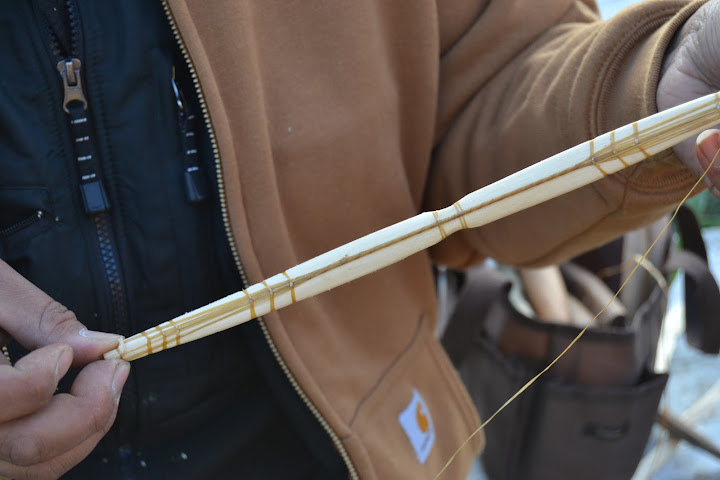
Image 2. Adding the last leage of artificial sinew on a 27cm long toy bow.
Image 3. The last strand is pulled under the hitches and then tied on the nock.

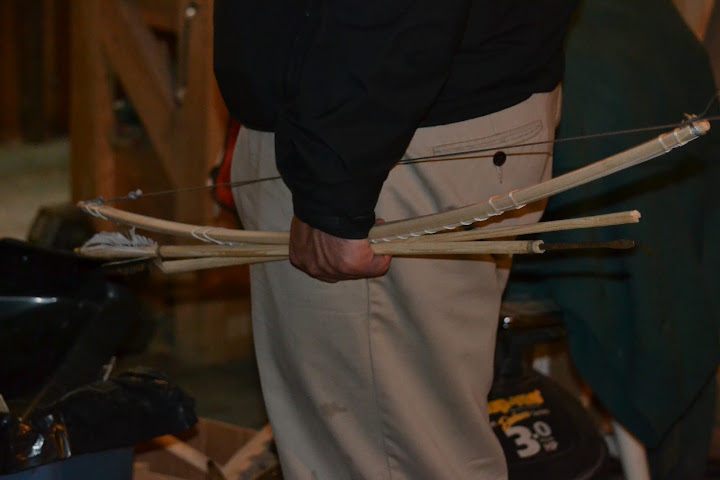
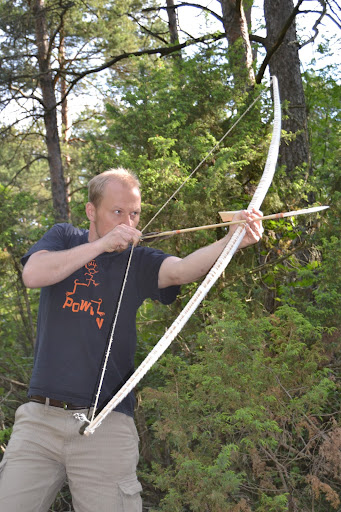
Image 4. It´s a fun toy but a bit dangerous due to it´s effectiveness.


Photo credits: Image 1-4, Marcus Lepola.

Dec 19, 2012

Using toy-bows to teach arctic bowyery skills

When teaching bowyery skills to others you often also learn new things as you teach. In my case I had a exceptional learing experience when I was visiting the archaeological repository at the Alutiiq museum in Kodiak. I stopped by the museum in between two scheduled archery workshops in Alaska. The first workshop was held in July at the Nutsiiq Spirit camp of 2012, the second one at Alitak Point in August.

Image 1. Toys in a drawer at the Alutiiq museum. The toy bown the top left corner is showing Yupík style recurved ends


.
The repository at the Alutiiq museum has a large archaeological collection from mainly the Karluk one site, They also have objects from other Kodiak sites as well. Karluk one was inhabited between 1420 and 1700s and the among the findings there is a wide array of hunting tools as well as toys intended to prepare young children of the Karluk society for their adult lives. Among these toys there were several small toy bow fragments as well as some nicely preserved complete ones. These bows range 35-21cm and represent two sligtly different types of flat bow.
Image 2. Sinew-backing a miniature bow.
I was impressed by these bows and my enthusiasm was also shared by dr. Sven Haakonson Jr.

We quickly realized the potential of these small bows as we were faced with some practical difficulties. Everything we took from Kodiak to the Alitak Point camp had to be hauled in on small plane and boat. We were worried about getting enough bow-billets to the camp workshops as we also had a lot of camping gear that we had to bring in. The miniature bows proved to be an excellent alternative as we were able to bring set up a class with less billets in stock. It is highly likely that a first time bowyer will fail with his first bow and this has to be taken in to account when setting up a bow-building workshop. In Finland I usually make longbows out of ash ranging in the 45-55 pound range. These classes are usually arranged in carpentry shops in schools. In Alitak there were no carpentry shops, also we were working with a material that most bowyers would not bother with: - spruce. For tools we had to settle for axes, small hand planes, knifes and sanding-paper.  
Image 3. Sinew-backed miniature Alutiiq-style bow.

As we were using spruce for bows we also concluded that the bows had to be backed in order to hold together. The original bows were wrapped with braided sinew cord but we settled for barided nylon fishing line.The small bows were backed with artificial sinew line. These small bows proved to be a invaluable method in teaching basic bowyery skills to the participants without destroying lot of valuable spruce billets in the process. Making a functional small bow is technically just as demanding as making real size bows. Bigger bows just require a little more time to make.
Image 4. The bowyery shop at Alitak Point,

Once the Alutak camp was set up we were able to start with our workshop. All participants were required to first produce a functional miniature bow before they were allowed to attempt making a real size bow. This enabled us to controll the skill of the individual participants and avoid unecessary waste of bow woods We produced 14 Alutiiq style bows during the camp of which 12 survived. The real size bows were made out of spruce, the toy bows were carved out of cured yellow cedar. The original model bow for the class is in a Finnish collection in Hämeenlinna and was collected by Hjalmar Furuhjelm in the late 1860s at Nuchek, Prince William Sound.
Image 5. Normal size Alutiiq Archery tackle produced at Alitak.
A novice will use some 2-4 hours making a toy bow, making a big one might take few days.The requirement for setting up a mini-bow workshop are minimal. A makeshift workhsop can be arranged anywhere. Knot free segments of spruce tree branches will suffice for a miniatur bow. 

Later in Kodiak we arranged a bow making workshop at the museum during which we only produced miniature bows with some 30-35 eager students.

Photo credits: Images 1-5, Marcus Lepola 2012.

Jun 17, 2012

Denai´na birch bows and shooting techniques

1. Denai´na bow in action.
I recently tried out one of my birch Denai'na bows.The unbacked birch bow was 35pounds at a 25inch draw 158cm long. The bow had taken some set in earlier trials which gave it a 3 inch string follow. In retrospect this could have probably been avoided with a more prolonged heat-tempering of the belly. The birch had been too fresh to begin with and my initial heat-tempering was probably inefficient as moisture in the tree vaporized from the belly and acted as an cooling agent during the tempering process.

2. The bow and arrow set before adding the cable. The arrow is a copy of a Denai'na arrow in the Furuhjelm collection.

Most Denai´na bows in museum collections do not have any string follow so that means that I must be doing something wrong. Also the quality of the living birch tree might have a role in the performance of the bow.

3. The Denaína bow Vk202 in the Museum of Culture in Helsinki.

I have used Finnish birch (Petula pendula) for my bows. The Denai´na used, or prefered to use "Black Birch" which essentially is Alaskan birch (Betula neoalaskana). Possibly the Alaskan Birch has better bow qualities than the Finnish birch.Compression-failure is a real problem in these bows and heavy birch bows are more likely to fail in this way. This is one reason for the excessive wrapping on Dena'ina cable bows which cover most of the bow limbs.
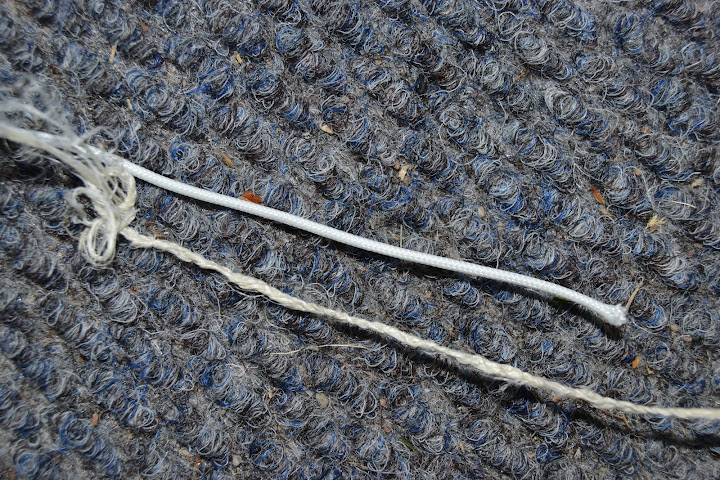
4. Real braided sinew and fake sinew.
I added a artificial sinew cable to the bow to find out what effect it had. As I did not have any ready sinew cord I had to resort to an synthetic option. I chose to use 3mm braided blind nylon cord which I bought in a local fishing tackle store at 0.3€ per meter. I added two loops from nock to nock and proceeded to add more cable to the bow approx one handwith from the knocks, spacing ten hitches towards the center of the bow approx. one finger width apart. In total I had as many as 28 strands laying flat on the back in the center section of the bow. I then wrapped up the bow with what was left of the string. In all I used up 50 meters of nylon cord to back this one bow.
5. Compare the two - the upper Denai'na bow has fake sinew, the lower Katmai bow has real sinew.
This added 5 pounds to the draw but I also felt that the bow was "stacking" towards the end of the draw. Perhaps due to the fact that nylon does not have the same strechting qualities as sinew. Braided nylon does stretch a little but it is also has a more slippery feeling to it than real sinew. The latter grips the wood better than the nylon which tends to slip off more easily. To summerize I feelt that nylon should only be used as a temporary solution until real sinew line is produced.

6.Athapascan draw, the arrow should be laying on the middle finger.
Using the bow is an interesting experience as the peculiar Athabaskan archery technique. The arrow is drawn with the right hand but the arrow is placed on the right side of the bow and the arrow is laying on the bow between the left hand fingers of the archer between the index and middle finger or the middle finger and the ring finger. When drawing the bow the arrow is pulled towards the archers right eye and the bow is tilted to the left.The bow guard is above the thumb of the archer.

The arrow also reacts to this type of shooting technique by being prone to excessive "jumping", that is the arrow spine has to be flexible enough to enable this type of shooting technique. I have to explore this issue further before making more assumptions on this matter. My goal is to get the bows up to 50 - 55 pound draw weight which would be a realistic weight for larger game animals such as caribou.

Photo credits 1,2,4,5,6. Marcus Lepola. 3. Martti Kujansuu

Apr 1, 2012

Alutiiq bows

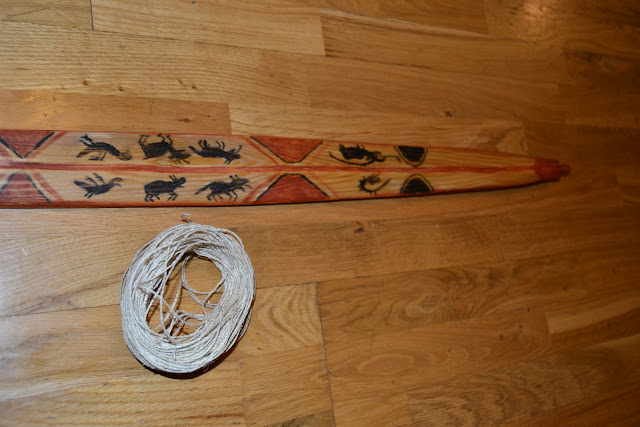
I have recently been working intensively with Alutiiq bows and archery tackle. I have so far made two replicas of  the TAV13 Aluutiq bow in the Furuhjelm collection. I have also made a replica of a painted bow, the original was collected by Hermann von Friederici from Kodiak between 1803-1806 and is in the collections of the Ajaloo Museum in Tallinn, Estonia. These apparently different types of bows have been attributed to the Alutiiq, and in some cases, Russian scholars have claimed that the painted bows are of Unangan (Aleut) origin. 

1. Detail on the original bow collected by von Friederici in the Ajaloo museum. 
These bows represent two different types. The larger painted bow, which can be referred as the "Katmai"  type, requires more carving than the Alutiiq bow which is rounded and has less surface-area than the first type.

2. The replica and 30 meters of twisted sinew string.
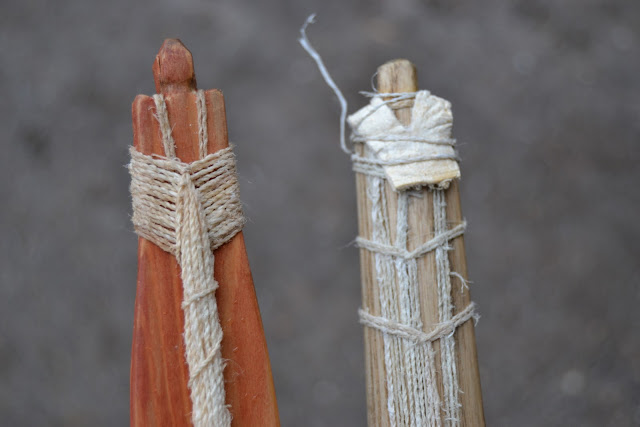
The original Ajaloo bow is 146cm in long, the replica is slightly longer, it measures 150 cm. The replica is made out of larch, which is the only native hardwood in Alaska. The cable backing is made up by 30 meters of twined sinew string which goes from one end to the other.


3. The TAV13 bow and the Douglas Pine replica.
The TAV13 bow was collected in the late 1850s by Hjalmar Furuhjelm. The bow originated from Nutchek village in Prince William Sound. The replicas are made of Douglas Pine and Ash. Ash was however never used as a bow wood by Alutiiq but I decided to make a compromise in order to have a practical test version of the bow. 

Both replicas and the original bow are 132 cm long. The backing is made up by 16 strands of plaited sinew, about 20 meters in all.  Moose leg-sinews have been used to make the cables on all three replicas

4. Both bows strung,

The design of the bows is very different, however both bows store a chocking amount of energy. The Alutiiq bow stacks quickly and reaches 60 pounds at a 24 inch draw. The Katmai bow is very stiff and I have been careful not to strain the limbs to much before the wood has had time to set. Currently the bow exceeds the 60 pound marker at 20 inches and it has not yet been drawn beyond that point.
5. Handle sections.
This process has yielded much new information about the Alutiiq bow making process and these discoveries will be in detail discussed in the ”Alutiiq bowery” - article I plan to publish in 2013.

6. Side by side view of the bow bellies.

I still have to make some plaited sinew string for these three replicas before they can be considered as ready.

7. Detail of the sinew binding at the ends of the bows.

Links:

Sources:

Beyond Bering. The Russian Colonies in the North Pacific 1741-1867. From the Estonian History Museum in collaboration with the Staatliches Museum für Volkerkunde Munich.
Jean-Loup Rousselot, Veronica Grahammer. Fondazione Galleria Gottardo 2004, 263 pp, ill [In Italian, Germany and English]

Photo credits:
1-7 Marcus Lepola 2012.


Mar 13, 2012

Replicating Eskimo Bow Technology – Is close enough good enough?

The Eskimo inhabit a wast range of the northern hemisphere. The arctic environment and the limited availability of natural resources influenced the material culture of the Eskimo. The kayak is a good example of how local availability of material for construction, together with the special functions of the kayak influenced the design of the craft. The same rules also apply to the bow and arrow.

The bow is not an "stand alone item" in the toolkit of the Eskimo, it is a narration of the environment and the particular culture from which it emerged. As anthropologists we have to be very conscientious about how we treat and present this narrative. It is our obligation not to disturb or change the narrative as it will only result in a dilution of the traditions we are trying to salvage.

As I have been preparing for my coming ”Alutiiq bowyery” trip to Alaska next summer, I have also been looking at number of written sources on Eskimo bow replication. There are not that many of them, but the name Errett Callahan keeps popping up in my browser. Dr. Errett Callahan is an renowned anthropologist/primitive technology specialist. In the late 1980s he was engaged in a project to teach the Inuit of Belcher Island traditional skills such as arctic bow making. Callahan's assignment was to recreate a bow similar to what had been used during the heyday of Arctic bow hunting and to later use the recreated bow in a actual caribou hunt. The project was published in three different articles in Primitive Technology II, Ancestral Skills 2001.
The bow Callahan replicated, a bow from Bristol Bay (plate 2 Murdoc).

As such the project is interesting and the finished bow along with detailed sketches produced a lot of practical information on Eskimo bow-technology. But there are also some issues with this project which need to be discussed in retrospect. Even if the project involved Canadian Inuit, Callahan focused on western Eskimo bows due to reasons of practicality, and thus ignoring the East Arctic bows all together. In his article he admits to cutting corners and in order to make a bow type he felt more comfortable re-producing, in this case a Yup´ík bow from Bristol Bay.

Is this a big deal? Yes, in my opinion, since going about projects in this careless manner is a distortion of bow making traditions that the anthropologist is trying to preserve in an given area. The bow Callahan replicated really has no similarities to bows in the Baffin Island area. The cable backing technique reproduced by Callahan is of the Southern Type (Murdoc 1890). This type of backing is different from the Arctic Type (Murdoc 1890) used in the East Arctic. Bows from this area were typically made out of antler which means that they had to be put together of several different pieces. The bow that Callahan reproduced was originally made out of one piece of spruce or larch (not ash). The Yup´ik of Alaska had better access to driftwood than the Inuit of the central Canadian Arctic and could more easily recover suitable material for bows. Driftwood was scarce in the Baffin Island area and this fact posed a large problem for the Inuit bowyers. If wood was ever found these pieces were often brittle and of poor quality, so antler was commonly employed for bow-building. The Southern Type backing is not suited for making several piece bows. However the more elaborate Arctic type backing is perfectly adapted for piecing together bows from several pieces.
This is how bows from the Baffin Island area look like. (fig 1, Birket-Smith 1918)

Any anthropologist researching and sharing knowledge on traditional skills should be mindful to the original narrative of the cultural area he is working with. This approach provides real possibilities for native elders and young people to interact with their environment in the same way as their ancestors did. Buying wood such as ash for bows from the local lumber store is only a half-way marker, it´s a good start but it should not be the ultimate goal. The risk is also that people are willing to settle for a ”lesser” version because the ”real-deal” is so much more difficult to make and probably performs less well than a top-of-the-line lumberyard bow.

A lot of hidden knowledge is being overlooked this way and perhaps even lost when choosing not to make the extra effort and going all the way with challenging reconstructions.
Cook Inlet sea-otter arrow, this type of arrows where only used for marine hunting.Mason 1894, plate LIX.

Another issue that I think is a bit problematic with the Callahan project was the two sets of arrows that he made to go along with the Yup'ík bow. One of these sets are replicas of Cook inlet arrows intended for caribou hunting. Callahan has been inspired by the sea-otter arrows from Cook inlet area and presents his own versions of these as replicas. These are in fact not replicas at all as these type of arrows which Callahan ”replicated” with obsidian points do not exist in any museum collections. This type of arrows with rounded bulbous nocks and high fletching were exclusively used for hunting sea otters or water foul from kayaks. The arrows used for land mammal hunting in the same Cook inlet area are of a entirely different type. In this case Callahan should have made it clear that these arrows are a distortion of the original and have no real scientific value as such.

It is important to be clear on when a project is more about "primitivist" experimentation than the reproduction of real ethnographic artifacts.  


Alutiiq bow in the Furuhjelm collection and the replica. Photo Marcus Lepola.

Further reading:

Birket-Smith, Kaj 1918. The Greenland bow. Meddelelser om Grönland p 1-28. Bianco Lunds bogtryggeri, Köpenhavn.

Callahan, Errett 2001. Archery in the Arctic 1-3. Primitive Technology II – Ancestral Skills, p. 119-133. From the Society of Primitive Technology, ed. David Westcott. Gibbs & Smith Publisher, Salt Lake City.

Mason, Otis Tufton 1894. North American Bows, Arrows and Quivers. The Smithsonian Report for 1893, pages 631-679. Government Printing Office, Washington.

Murdoc, John 1890. A study of the Eskimo bows in the U.S. National Museum.From the Report of the Smithsonian Institution 1883-84 part II, pages 307-316, I-XII. Government Printing Office, Washington.  

"Själen" – Seal Hunting in the Northern Baltic Sea

Foreword The following post is intended as a more academic source of information on traditional sealing in Finland and the Northern Baltic...